main bit This page looks very fancy in a modern browser, with "stylesheets" and "layout" and thing, but frankly I prefer the way you're seeing it here. Congratulations for not crumbling to the Browser Upgrade Initiative! Support the Web Designer Downgrade Conclusion!
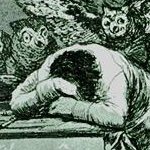
a man slumped on his desk, from 'The Sleep of Reason Produces
      Monsters'

Oblomovka

oblomovitis

latest entry

this year
2006
2006
2005
2004
2003
2002
2001

rss

search entries:

usual, suspect

need to know

haddock

boingboing

current thrills

Thinking List

Delicious Links

EFF DeepLinks

sponsors

David McBride

Adewale Oshineye

Diggory, Andrew, and Matt R.

writing

ancient notes

why I like 802.11
senate committee letter
oscon2003
ms and free software

code

ubiquity
webolodeon
wat
tagling
haiku

info

e-mail

homepage

pgp etc

amazon wishlist

oblomov

the book

    August 2003     
Su Mo Tu We Th Fr Sa
                1  2
 3  4  5  6  7  8  9
10 11 12 13 14 15 16
17 18 19 20 21 22 23
24 25 26 27 28 29 30
31                  
<<Jul Sep>>

Currently:

2003-08-28

so i wrote a bit for the guardian

So I wrote a bit for the Guardian on the Creative Archive. The report of the meeting on the Charter is as accurate as it goes - it's vague because it was reported to me via around a thousand degrees of other people.

A few people have been pointing out that the Greg Dyke announcement isn't quite as much as it's being cracked up to be - that at no point do they announce that the whole of the back-catalogue is being made available, and that it could all boil down to, essentially, a bunch of moving clip-art for kids.

That's true - and I bet that when the first parts of the Creative Archive appear, it'll be easy to see it as just that. You'll get nature documentaries, educational programmes, old news footage. That's because that stuff is the easiest to clear, and the easiest to justify spending the money digitising. The people expecting their instant and free Hitchhiker's Guide are going to be disappointed.

The Charter discussion is still going on at the BBC - they're still feeling their way to a position on new media and copyright and their role in the 21st century. Greg Dyke's talk of the Creative Archive is ambiguous, because it's still not decided what form it should take. But they do know all the sides. They could play it ultra-cautiously: provide a smattering of the archive, wrapped up in DRM to stop non-UK viewers from seeing it. They could drop the initiative and let the commercial companies make the first steps into this area (as they did with Sky and satellite).

But I do think that they have an enormous opportunity here to lead - to encourage broadband uptake by filling the network with quality content, to raise the bar on what we expect from Net content, and to encourage people to reconsider what people are *doing* on the P2P networks in broader terms than just "evil pirates". Providing generously licenced, raw material online that viewers can share and edit amongst themselves represents the same kind of strategic initiative that FreeView did in the digital TV market. Running to lead the pack, by emphasising the difference between the BBC and the commercial networks, instead of trying to narrow the difference and following in their wake.

It'll take a lot of guts for them to really do all of this. The BBC gets its guts partly from its leadership, and partly from its public. If people give it the sort of excited support that see online for the wider ideal of the Creative Archive, then it will happen. There are people in the BBC - high-up people - who really do understand the Net and will do this if they see it as potentially popular idea.

If people expect a smaller, weaker, Archive, and expect a more compliant, fearful BBC that thinks more about cutting a penny off the license or aping the commercial networks than it does about providing a brand new approach, the ideal will wilt on the vine, and that's exactly what they'll get.

If you think this is a good - albeit unlikely idea - you have to stand up for it. If you think that it'll never happen, and repeatedly say so, it won't. Think about it: the Conservative Party is saying that they'll consider telling the BBC to shut down its Website if they get into power.

Do they mean it? Hardly. They're testing the waters: seeing how the public reacts to such an idea; seeing if it's something they'll win or lose a few votes with. Your response counts, because it tells them, and the BBC how the land lies.

It's the same thing with the Creative Archive. It's not set in stone what this will be. That's determined partly by Greg Dyke, and partly by public reaction.

I'll be honest, I wrote the Guardian piece (and to a lesser extent, the last few blog entries) to inch the discussion toward the sort of terms we're used to discussing online. To include in the debate the idea, alien to most TV execs, that the file-sharing networks can have a function beyond simple piracy. The idea, alien to most TV execs, that everything the BBC should do should be free because we have already paid for it. And the idea, alien to most TV execs, that DRM-unencumbered works are better, not worse, than copy-restricted systems.

These ideas are so common online, and so alien everywhere else in the media world, that I sometimes doubt that the two worlds can be bridged. The media world cannot conceive of anyone thinking that pirates are actually customers; that free is good; that DRM is not a beautiful gift from the technogods. The online world has long since despaired of anyone understanding the opposite.

One of the few organisations that I've seen that contains people who understand both is the BBC. But what they don't know is which side they should take. Yet.

2003-08-24

more on the bbc creative archive

Here's the full text of Greg Dyke's speech. Here's the key passage in full:

Looking ahead, let me give you one example of the kind of thing the BBC will be able to do in the future.

The BBC probably has the best television library in the world.

For many years we have had an obligation to make our archive available to the public, it was even in the terms of the last charter.

But what have we done about it?

Well, you all know the problem.

Up until now, this huge resource has remained locked up, inaccessible to the public because there hasn't been an effective mechanism for distribution.

But the digital revolution and broadband are changing all that.

For the first time, there is an easy and affordable way of making this treasure trove of BBC content available to all.

Let me explain with an easy example.

Just imagine your child comes home from school with homework to make a presentation to the class on lions, or dinosaurs, or Argentina or on the industrial revolution.

He or she goes to the nearest broadband connection - in the library, the school or even at home - and logs onto the BBC library.

They search for real moving pictures which would turn their project into an exciting multi-media presentation.

They download them and, hey presto, they are able to use the BBC material in their presentation for free.

Now that is a dream which we will soon be able to turn into reality.

We intend to allow parts of our programmes, where we own the rights, to be available to anyone in the UK to download so long as they don't use them for commercial purposes.

Under a simple licensing system, we will allow users to adapt BBC content for their own use.

We are calling this the BBC Creative Archive.

When complete, the BBC will have taken a massive step forward in opening our content to all - be they young or old, rich or poor.

But then it's not really our content - the people of Britain have paid for it and our role should be to help them use it.

Alan Connor has a great explanation with exciting archival pictures. Brewster Kahle says thank you.

It just gets better and better.

more guerilla usability

THEY HAVE TURNED AGAINST THEIR MASTER. Built for the Future is holding a competition to redesign Jakob Nielsen's site.

freeing the bbc

This is a bigger story than it looks at first glance. Here's the quote:

Greg Dyke, director general of the BBC, has announced plans to give the public full access to all the corporation's programme archives.

Mr Dyke said on Sunday that everyone would in future be able to download BBC radio and TV programmes from the internet.

The service, the BBC Creative Archive, would be free and available to everyone, as long as they were not intending to use the material for commercial purposes, Mr Dyke added.

Now, ask yourself: why is it called the Creative Archive? Could it be something to do with a series of talks Larry Lessig gave to the BBC earlier this year? Conversations that continued in San Francisco with Brewster Kahle of the Internet Archive ?

I hope so. If it is, the public domain (or at least, the domain of the freely distributed, freely available content) is about to get a very sizeable grant. Eighty years worth of radio, televisual and film content, from the General Strike to World War II to the era of Benny Hill and the world of the Hitchhiker's Guide . From Richard Dimbleby and the Coronation to David Dimbleby and Donald Rumsfeld.

It shouldn't be surprising that groups like the Creative Commons, the Archive and the BBC are working together. In an era of cheap distribution, the BBC's role is much closer to an archive or Library of Congress than it is to the commercial media companies.

The BBC's job isn't to make money out of ingenious intellectual property arrangements, or barging its way to take a share of a DRM-restricted viewing pot. Despite how it looks sometimes, the BBC isn't just another Fox or Warner Bros. The BBC's job - or part of it - is to distribute knowledge. Or, in the terms of its founding father, Lord Reith, to "inform, educate and entertain".

Making new programmes is part of that: but current productions are just a fraction of the publically-produced bounties of the Beeb. There is, as Dyke says, a treasure trove of material beneath the day-to-day broadcasts of the BBC. Repeats or not, what the BBC broadcasts on any given day is a tiny, tiny fraction of its total creative output over the last century.

And there's a really strong argument that says that once a program is made and paid for by the BBC, its primary obligation is not to obtain revenue from that creation, but work as hard as possible to make sure that everyone has access to it. The license payers gave their money to the BBC to create David Attenbourough's Life On Earth, or Michael Palin's Train Journeys, or Monty Python, with the express intention that they shouldn't have to pay for it ever again. Like universities, these works were created for the public good, and should be freely given to the world.

The trouble is that until now, freely giving was very expensive. The Corporation had to ape commercial broadcasting companies, because that was really the only model for creating and distributing creative works for a reasonable price.

But it's not a great match. Competitors to the BBC grumble that the corporation was undercutting them in the market. The BBC itself is obliged to hurl itself into contortions whereby they are forced to restrict access to their content because the commercial licensing technology they used couldn't cope with the idea that this content should be seen by everyone. Or else critics within and without the BBC would get so confused as to complain that some content should not be seen by non-license payers because "they hadn't paid for it". As though the job of the BBC was to produce the world's best television, and then hoard it in a bunch of islands off the coast of Northern Europe. As though Britain's best interests weren't served by spreading its voice far and wide across the world. As though the BBC needed the money.

But now, that cost of distributing is vanishing. The BBC doesn't have to jump through these hoops to do its job. It can concentrate its costs on production, and then let the distribution take care of itself. These days, as Napster taught, its harder to stop good content getting into the hands of those who want it. Content distribution is free: content restriction is costly.

So here we are. While the commercial companies fret over the dangers of P2P and zero-cost replication, the BBC has realised that this is its greatest opportunity. Not to beat commercial media concerns, but to finally stop mimicking them.

It's heartening to see how quickly the BBC spotted this. From the first informal conversations at the lowest levels, to the acceptance by the most cynical realists at the top of the corporation, it took just 18 months for the BBC to get it. Compare that to the tardiness of the supposedly fast-thinking commercial companies.

Actually, that side been a bit frustrating for me. I've written a couple of articles on what a great idea it would be for the BBC to open source its work - only to have them turned down by commercially-run concerns because they couldn't possibly imagine the BBC would ever do such a thing. Give away the Crown Jewels? Preposterous!

And now they've gone and announced it.

There are some big questions. Sorting out the contractual issues with anything but completely internally produced content will be difficult. There are artist's residuals (payments made to actors for repeat showings of their work), external commercial content, and international rights to consider.

It's not clear what kind of licence the BBC will settle on for its archive. Will you be permitted to redistribute the material on file-sharing networks? Will you be able to do your own remixes of Dr. Who? Show BBC programs at your not-for-profit society? Make parodies of the news using real news footage? The project is a real legal adventure.

But this is exactly the sort of adventure the BBC should be embarking upon. Instead of moping around trying to be "competitive" with commercial interests, it should charge in a completely orthogonal direction, pumping up the public domain, spilling out information in all directions, letting nation speak unto nation, and peer to peer.

"I believe that we are about to move into a second phase of the digital revolution, a phase which will be more about public than private value; about free, not pay services; about inclusivity, not exclusion.

"In particular, it will be about how public money can be combined with new digital technologies to transform everyone's lives."

- Greg Dyke

Discuss Freeing the Beeb

2003-08-23

dialogue

    me: hey, check out my new links panel! you have to hit shift-reload.
     q: "you cannot wave your unread bible and scare me." what if it's a
        really heavy-looking bible and I'm waving it close to your head?
    me: you know, there are bible literalists. and then there are just
        literalists.

ObLinks

Okay, it's done. You may have to hit reload to get the new CSS stylesheet for this page, but there's now a train of URLs trickling down the side of the page. There's a separate RSS feed too.

2003-08-22

mozilla coffee

Ronald J Tarpley is a coffee seller and Mozilla geek. So he's set up a line of coffees that support Mozilla. [insert java support joke here]

Hmm. I need to rig up some kind of remaindered URLs feature here.

purplewiki

Okay, this is fairly ingenious. Here's a wiki spin-off which places small purple permalinks at the bottom of each paragraph, so that you can refer to them elsewhere. I was wondering how they deal with matching the right permalinks to paragraphs that have changed (do some sort of ingenious diff? Some weird Xanadu-derived algorithm?). Then I played around, and I realised - they just use the Wiki nature. The program sticks in a permalink whenever it sees a paragraph without one. It appears in the text itself as "{nid0}". Wiki editors choose where it should go.

2003-08-21

freak-out!

Sorry about the not-blogging. To be honest, the response to that Perl vs Python deliberation rather freaked me out. It wasn't terribly well thought-out, yet was followed by dozens of smart responses by people who I assumed spent their spare time simulating 1024x1024 cellular automata in their heads, or inventing a new form of anthrax and then devising the antidote - not reading me. It's a bit like mumbling into your dictaphone and then discovering a little wire that leads out of it into Broadcasting House. I got the Fear.

I promise to be more slapdash.

2003-08-20

a story about trolls

A story about trolls, translated by Andrew Brown.

bill thompson: info-anarchy as cultural imperialism

Bikinis in Saudi Arabia: info-anarchy as cultural imperialism. Noted without comment. I do wish Bill would come a bit more out into the fray. He keeps punting out these ideas and then never replies to the criticisms (apart from in this constrained environment of mind-tennis game with Siva Vaidhyanathan). I'm sure he must read his detractors. Who is he talking to?

Siva says that "this issue is not about bikinis in Saudi Arabia", but of course it is. It is about the ability of a government to assert appropriate authority over online activity, whether it is in breach of copyright law or against public standards of morality. Pushing for information anarchy is just another way of endorsing US cultural imperialism, with its stress on US values and free trade. When cultural floodgates are opened - and abandoning any possibility of regulating the net in favour of p2p-induced anarchy would open them - then US culture comes to dominate. Look at the film industry or the games market.

Alright, noted without much comment.

2003-08-19

a day of firsts

Ups and downs. Ada got her first food and I got my first dunking in rice cereal today. She's also a bit poorly with her first virus. She takes being ill well: lots of pained half-smiles and plenty of sleep. I am completely amazed that harmless childhood viruses really do result in red polka-dots. I thought that only happened in cartoons. We carry some entertainingly visual DNA fragments on our broad shoulders.

Hutton Inquiry no longer a frame-up

We've been running a competition on NTK to get people to redesign shit nebsites - literally, pulling the useful content dynamically from the terrible sites and redisplaying it in something close to usable form. Think of it as the paramilitary wing of the usability movement. Anyway, the de facto leader of this practice, Matthew Somerville, has just hacked together a marked improvement on the laudable but javascript-o-frame-o-riffic official Hutton Inquiry site.

2003-08-14

junk dna, and bernard lietaer on money, community and social change

Quinn told me two years ago that the basic problem with the global economy was that the idea of money was broken. Around the same time she announced that junk DNA had to have some sort of function, despite what current theories indicated. I humour Quinn on these and other theories, as long as she doesn't talk so loudly that the geneticists and economics professors at the next table hear her speak that way.

Today I discover that a) some scientists are coming to the same conclusion about junk DNA, and b) the guy who co-designed and implemented the convergence mechanism for the Euro, and co-founded one of the largest and most successful currency funds, Bernard Lietaer, agrees with her about money.

I can only conclude that those bastards were scribbling notes on their napkins all along.

california recall confession

Is it bad to secretly wish Schwarzenegger gets in, just because of the excellent rewrites of California Uber Alles it will encourage?

2003-08-13

co-loco

The co-location company that hosts a community server with which I'm involved went bust - at 11am yesterday. Without telling anyone, including their own tech support and hosting facility.

I suppose we could have predicted this. We've been trying to pay them for for a few months now, with very little success. Hard fast rule of e-commerce: if you make it impossible for people to pay you, and yet you are expecting to be paid, something bad will happen.

We can tell the precise point at which the co-loc company ceased to co or loc, because at that moment our machine vanished off the Net. A lot of heavyweight sysadmin types run their mail from this box, so turning off the packets is a bit like throwing up the BOFH-Signal into the sky. Heads turn.

First step when a hosting company spontaneously bankrupts: get your box out of there before the creditors mistakenly melt it down for slag. A fantastic friend who runs her company from the box ran cross-town to airlift it out. Serendipitously she bumped into a guy who is running a hosting outfit in the racks upstairs. He's an ex-employee of our co-loc, and realising what is going on, kindly takes us (and I'm guessing several other bedraggled servers) on board and plugs us into his network.

He's given us a few days leeway to sort ourselves out, but - always assuming this all hasn't been part of his evil masterplan - I think we'll go with him. He's still at that phase where he knows all his customers and answers the phone himself. I still have problems explaining to people why little ISPs like this seem to work better than big ones. I guess, if I wasn't so dog-tired, I'd say that the economies and diseconomies of Internet services are shaped like a big mexican hat. You can scale up pretty quickly, and then it all goes to shit until, if you're lucky, you sell out to someone big enough to run matters properly again. You can either be Henry Ford or William Morris, but you can't be Mr In-Between.

2003-08-11

python templating

Well, the weekend's over, and I'm sticking with Python. I caught up to where I was with the Perl implementation pretty quickly, and in far fewer lines. To be fair, I think a sizeable part of that may have come from me using the Test::Unit / unittest suites to do my test-first development. Both are derived from Kent Beck's Smalltalk framework and are very OOP-oriented, which favours Python over Perl5. I was beginning to stumble into some hairy data structures with Perl, all of which turned out a lot simpler-looking in Python. That, and I'm doing some email mangling in this part of the coding, and Python's built-in email module has much of what I need. There are some even better libraries in CPAN (as usual), but I was greatly spoilt for choice and little spoilt for time.

Anyway, this still leaves the problem of a decent templating solution for Python. I got loads of very useful suggestions, which I'll attempt to summarise here:

Aaronsw wrote back to say that he uses cheetah and sqlobject . He wrote back suspiciously fast. I think it may have been one of his bots talking. Both cheetah and sqlobject look tempting - especially as sqlobject supports sqlite, and I'd like to stick with that very basic SQL implementation until my lusting and hunger for relational database power become known to more people, as the Boney M song has it [1].

Noted real-world Python user Zooko said that the Mnet gang would probably be going for whatever templating Twisted had. Then he confessed that they probably wouldn't have much need for templating at all. His most abiding point was, I think, to exclaim w00t python w00t, which I took to heart.

Jonathan Moore says "all the cool kids have quit templating and gone to XSLT", which I subconsciously knew. But then if the cool kids jumped off the Post Office Tower, would I join them? Naturally, because cool people are usually into BASE jumping and stuff like that, and would be cool enough to help me with basic safety precautions. And, besides, how cool does jumping off the ... I digress.

My thoughts: XSLT is one of those technologies best kept for either times when someone is paying you to learn it, or you've lied on your resume and said that you wrote the W3C spec, and now you find you have the job of your "dreams". I'm in neither position, for once.

David Jeske wrote an informed recommendation for ClearSilver, which isn't surprising as he's been hacking on it for yonks. ClearSilver looks really interesting. It has a nice, simple, theory behind it. The original, closed-source version drives Yahoo Groups . Jeske and friends' open source re-implementation is used at Weather Underground. It doesn't get much more hardcore than that.

Van Gale backed up the Clearsilver recommendation, and also put it in a plug for Cheetah and TAL (the Zope templating system untimely ripped from the rest). Van has a soft spot for PyMeld too, but wasn't sure if it could cope with high-performance sites. Richard Jones likes SimpleTAL.

When I hit my templating problems, I think I'll hit them back with either ClearSilver or Cheetah. Which one will depend on the size of my problems and on what speed I'm plummetting into disaster at the time.

[1] - Rasputin would make a great name for an open source project.

2003-08-09

py vs pl

I've got a new medium-sized project to be working on. It's just me coding it at the moment but at some point (if it comes together), I do want to be able to pass it on to someone else, preferably without apologising first.

I'm utterly torn between Perl and Python. My first choice in this case would be Python, because bad Python code doesn't seem to be quite so personal. I've seen people spit blood at other coder's Perl, just because it's not the way that they would do it. Perl demands rather more sympathy with your predecessor than does Python. With Python, it's just more code to stare at.

That said, your successor does need to actually know the language. Most of the people I can imagine maintaining this code will know Perl but not Python. Python doesn't take that long to learn, but reading Python to take on someone else'se project just isn't much *fun*. Sitting down to learn someone's Perl, while tough, does teach you about the way they were thinking when they wrote the application. Python's clarity, I think, cuts down on its expressiveness in depicting why certain decisions were made. When I had to hunker down and learn POE or Moveable Type, for instance, I came away with a very deep understanding of how it was supposed to work. It was fun, albeit time-consuming. I sometimes have problems doing the same with slabs of Python code, just because they can be very lacking in personality.

That said, I'm not paid to be a programmer. What is fun is a hobby can be skull-crackingly frustrating in a job with a deadline.

I eventually made the decision to go with Perl and Mason - mainly because of Mason. I know a lot of people who know Mason who I can ask when I got stuck, and there's a fair bit of this code that will end up being on a Website, eventually. There don't seem to be any Python templating solutions that stand head-and-shoulders above the crowd (and whose implementors I know). I felt that going with Perl would provide my successor with a clearer understanding of the whole project, and not necessarily lock me into an immature Web tech that no-one knows.

Now, a couple of days into it, I've begun to seriously reconsider. I'm nowhere near the Mason bit of the application, and I'm getting continually bogged down in Perl style issues that really don't have anything to do with what I'm trying to write.

To be honest, I think this is my Perl rustiness kicking in; and I think it may go away after a few more days hacking. Worse, though, is the effect of something I thought would be a real boon - CPAN. There's a bunch of useful utilities there that I'd love to suck in and use in my program. But they all have different idioms - all of which I have to sit down and learn. Plus there's the whole dependency issue: sooner or later I'm going to have to install all of this on the working server, and there's a real penalty to be paid for being dependent on a lot of scattered Perl modules. Will they work? Will they still be maintained? Which of alternative implementations should I choose?

So, I'm going to spend this weekend having a bash at a Python version. My XPish working style has recently become dependent on a lot of Python features, and the Python core library has most of what I need in the way of modules. I really haven't written much code, so there's not much time lost. And I figure that if it all goes to hell in Python too, I'll learn my lesson quickly and go slinking back to Perl with my tail between my legs. Plus, no-one's paying me to be decisive here. As if anyone would.

I still don't know of a good, solid, Python templating language though. Or rather, I know of three or four, but I don't know anyone who has used any of them seriously in high-volume production environments. I'm not interested in Zope or Twisted (tempting though they are) because I'd be obliged to wrap my solution in their terms, but I really don't know whether I should go for SkunkWeb or WebWare or Spyce or any of the others.

Right now, I'm delaying the decision until I'm a bit deeper into the code. Which feels a bit uncomfortable. But under the terms of XP, perhaps forgiveable.

2003-08-07

dirty, dirty junk mail

There's a US federal law which lets individuals prohibit companies from sending unsolicited sexually provocative or erotically arousing mail. According to the postal ruling implementing this law, ""Postmasters may not refuse to accept a Form 1500 because the advertisement in question does not appear to be sexually oriented. Only the addressee may make that determination."

Kayne McGladrey is doing the obvious thing: declaring that all those Sharper Image catalogues and coupon collections are quite filthy, and should be exorcised from her letter box. Instructions included.

vim tips RSS feed

Learn something new every day, with the vim.org tips RSS feed. (Thanks, Phil!)

2003-08-06

at the court of homeland security

A friend of mine was going to drop by while on a trip to San Francisco in a few months. Not anymore. He's a french citizen living in the UK. When he went to renew his passport, he discovered that the french consulate can't provide him with a machine-readable passport. And from October the 1st, the US is refusing visa-waivers to anyone without one. You have to get a normal visa. Male visa applicants aged between 16-45 also have to fill in this new extra form, DS-157.

Questions on the new form include:

Understandably, he objects to filling in this form. So he's not coming.

There's a lot of problems with demanding info like this, but I just want to concentrate on one.

Most American voters will never see this form, and neither will the citizens of countries that the US media listens to.

But the majority of people visiting the US will. Any male between 16-45 coming from these countries will:

Afghanistan
Albania
Algeria
American Samoa
Angola
Anguilla
Antarctica
Antigua and Barbuda
Arctic Ocean
Argentina
Armenia
Aruba
Ashmore and Cartier Islands
Atlantic Ocean
Azerbaijan
Bahamas, The
Bahrain
Baker Island
Bangladesh
Barbados
Bassas da India
Belarus
Belize
Benin
Bermuda
Bhutan
Bolivia
Bosnia and Herzegovina
Botswana
Bouvet Island
Brazil
British Indian Ocean Territory
British Virgin Islands
Bulgaria
Burkina Faso
Burma
Burundi
Cambodia
Cameroon
Cape Verde
Cayman Islands
Central African Republic
Chad
Chile
China
Christmas Island
Clipperton Island
Cocos (Keeling) Islands
Colombia
Comoros
Congo, Democratic Republic of the
Congo, Republic of the
Cook Islands
Coral Sea Islands
Costa Rica
Cote d'Ivoire
Croatia
Cuba
Cyprus
Czech Republic
Djibouti
Dominica
Dominican Republic
East Timor
Ecuador
Egypt
El Salvador
Equatorial Guinea
Eritrea
Estonia
Ethiopia
Europa Island
Falkland Islands (Islas Malvinas)
Faroe Islands
Fiji
French Guiana
French Polynesia
French Southern and Antarctic Lands
Gabon
Gambia, The
Gaza Strip
Georgia
Ghana
Gibraltar
Glorioso Islands
Greece
Greenland
Grenada
Guadeloupe
Guam
Guatemala
Guernsey
Guinea
Guinea-Bissau
Guyana
Haiti
Heard Island and McDonald Islands
Holy See (Vatican City)
Honduras
Hong Kong
Howland Island
Hungary
India
Indian Ocean
Indonesia
Iran
Iraq
Israel
Jamaica
Jan Mayen
Jarvis Island
Jersey
Johnston Atoll
Jordan
Juan de Nova Island
Kazakhstan
Kenya
Kingman Reef
Kiribati
Korea, North
Korea, South
Kuwait
Kyrgyzstan
Laos
Latvia
Lebanon
Lesotho
Liberia
Libya
Lithuania
Macau
Macedonia, The Former Yugoslav Republic of
Madagascar
Malawi
Malaysia
Maldives
Mali
Malta
Man, Isle of
Marshall Islands
Martinique
Mauritania
Mauritius
Mayotte
Micronesia, Federated States of
Midway Islands
Moldova
Mongolia
Montserrat
Morocco
Mozambique
Namibia
Nauru
Navassa Island
Nepal
Netherlands Antilles
New Caledonia
Nicaragua
Niger
Nigeria
Niue
Norfolk Island
Northern Mariana Islands
Oman
Pacific Ocean
Pakistan
Palau
Palmyra Atoll
Panama
Papua New Guinea
Paracel Islands
Paraguay
Peru
Philippines
Pitcairn Islands
Poland
Puerto Rico
Qatar
Reunion
Romania
Russia
Rwanda
Saint Helena
Saint Kitts and Nevis
Saint Lucia
Saint Pierre and Miquelon
Saint Vincent and the Grenadines
Samoa
Sao Tome and Principe
Saudi Arabia
Senegal
Serbia and Montenegro
Seychelles
Sierra Leone
Slovakia
Solomon Islands
Somalia
South Africa
South Georgia and the South Sandwich Islands
Southern Ocean
Spratly Islands
Sri Lanka
Sudan
Suriname
Svalbard
Swaziland
Syria
Taiwan
Tajikistan
Tanzania
Thailand
Togo
Tokelau
Tonga
Trinidad and Tobago
Tromelin Island
Tunisia
Turkey
Turkmenistan
Turks and Caicos Islands
Tuvalu
Uganda
Ukraine
United Arab Emirates
Uruguay
Uzbekistan
Vanuatu
Venezuela
Vietnam
Virgin Islands
Wake Island
Wallis and Futuna
West Bank
Western Sahara
World
Yemen
Zambia
Zimbabwe

And this is what they will learn of this country: that it requires that a large amount of biographical data be handed over to its government. It obligatorily requires anyone to reveal any and all organisations, political or social, of which they are a member. That its government also demands to know the location of those within its borders, and the precise time of their movements. And that men and women are to be treated differently.

I think it's one thing to require visitors to a country to obey its laws, and comply with its values. But to propose a set of rules like this that seem to me to represent the very opposite of those values - well, that seems to be not only wrong, but a strong danger sign.

I keep on asking: if this bureacracy, this data collection, this process is necessary or even useful, why is it not applied to all Americans too? Or, if the administration is only worried about foreign terrorists, all visitors?

I cannot imagine that the percentage of terrorists in the sum of non-visa waiver countries is much larger the some total of terrorists globally. Either way, it is a tiny fraction. Why are we collecting so much data on the rest of the world? And if it is not a problem - a minor inconvienience - why don't we subject ourselves or the majority of Europeans to it, too. What do we have to fear?

I really think that these questions should be universally required, or not required at all.

Or is it simply because we know that Europeans, and Americans have a greater voice; can declare these questions to be against their natural rights? Do they have more natural rights than others? Is that what the bill of rights means? That these rights are reserved only for American citizens and their companions? Is that what the creators of these rules propose?

I worry about this, and I worry about any number of other proposals that seem to go through without the slightest oversight by all the checks and balances of this country. And I worry that the people who are in charge don't seem to consider what they are doing might be wrong.

The point at which the Constitution becomes little other than a crucifix one waves at powerful figures who have no understanding or sympathy with the values it represents, is a point I believe it at risk of becoming useless, even to those few who can still shelter behind it.

me vs it

My editor mailed me to ask about that last entry, and whether we should rewrite the piece. He said someone had pointed it out to him.

Someone, my foot. Do you see what this is? This is the Internet getting back at me again. Leave me alone, Internet, I say, waving my fist in an indescribable direction.

And I've finished the CD-ROM piece (it was all right), even though when I started to do some last minute research, the first site that came up for my google search terms was my own QuickTopic page. Oh very clever, Internet. Very sarcastic. Just because you don't want to do all the work.

I'm not linking to anything on this entry, just to punish it.

Oh alright, here's some nostalgic reminiscences about people's first computers.

You liked me then.

2003-08-04

me vs. them

I've just spent about two weeks researching various Wi-Fi contention and multi-hop routing issues for an article. And within minutes of finishing it, Slashdot runs two stories that would have saved me most of that time. And which, anyway, now transform my ingenious point into common knowledge for most /. readers.

I hate the Net. Hates it, hates it.

2003-08-02

annie and russell

Flew up to Portland and back down, which involved getting up at 5AM and stumbling home for 5PM. Was absolutely worth it though, as I slid into being a guest at my grandparents-in-law's wedding. Annie and Russell are a fine couple and were dressed to the nines. They're both over eighty, and have been living together for thirty years. It was beautiful, so beautiful in fact that every picture Quinn and I took ended up looking like the arresting front-cover image from a major corporate rebranding exercise.


(from Quinn's moblog)

Can't you see that on a double-page spread, with "For All The Colours Of Your Life: Reckitt Industrial " underneath?

I have an even better one of Annie talking on a mobile phone while Rusell looks on, from behind a big wedding cake. I await the call from Verizon's marketing team.

2003-08-01

libegg

Spent the day not-writing in the brand spanking new MLK Public Library in San Jose. It's a co-operative venture between San Jose University and the city itself. Puzzling over how to get to the uni and the town's residents to integrate better, they decided to smersh their two (slightly poor) library collections together into one $178 million co-venture.

It's worked amazingly well. Everything was running smoothly on the first day. They've combined the two catalogues (even though one used Dewey and the other the Library of Congress cataloguing system), and moved both groups of readers into a brand new building.

There are 150 data-ports in the building for laptops, about three hundred PCs for general use, and hundred laptops that can be loaned. See how long they last. (No wifi yet, though.) Looks like they've negotiated deals with all the SJSU academic database providers - so I can get LexisNexis ,the O'Reilly Safari. book collection, the OED and a stack of other for-money subscriptions if I access them from within the building.

The printed book collection really benefits from the merge. The usual popular introductions to non-fiction fields are all there, courtesy of the public library, and backed up with several large research collections if you're tempted to pursue any in more detail. I love deep, wide archives like this.

The selection gets more and more ethereal as you clamber up the seven floors. There's a browsing section on the ground floor, laid out like a bookstore, and at the very top, there are piles of SJSU theses, empty group study rooms and that hay-and-dust smell of old, hardbound stacks.

But my favourite moment was when Quinn and I were snooping around the pop fiction section. Someone leant on the "Mystery" bookshelf. It swung around, to show a false shelf of books behind with a fake secret passage.

A library with easter eggs!

2003-07-31

you commendo

It's been ten years since CD-ROM drives became affordable (prices dropped from $700 to $200 in 1993), and I've been asked to write a piece about the rise (and fall) (and rise) of the CD-ROM as a medium. As part of this, I'm doing a little retrospective of the best CD-ROMs of the decade.

It feels a bit odd to hive-off CD-ROM as a category. There's something very 1996 about doing that. It does mean something, though: a package that depends on permanent storage rather than pulling data off the Net; whose form is melded around slow-access times, and perhaps nodding to that "digital book" ideal.

I'm guess I'm looking for apps that exploited the CD-ROM form well, and perhaps lived up to that all-to-brief moment of being the forefront of "interactive multimedia", but have still managed to survive the test of time.

Me, I have a soft-spot for Voyager's Spinal Tap, which not only set the standard for video CD-ROM, but I think defined how DVD bonus material would be executed. And I think I'll include the original Myst (even though I'm a bit loathe to include every game too big to fit on floppies), because its rendered gameplay was such a ingenious exploitation of the large size of CD-ROMs, rather than clever programming. And then there's the You Don't Know Jack, spin-offs of which I still see for sale.

What are your favourites? All suggestions ungratefully purloined.

Discuss!


petit disclaimer:
My employer has enough opinions of its own, without having to have mine too.