2026-11-18»
Here Come The Rains Again»It’s El Niño in San Francisco: the experts disagree, but that’s all they ever do these days. El Niño effects, they say, are minor now, and peak next year. The King Tides come next week. The rains and the floods and the cold are not unknown for a San Francisco winter. It’s just the time of the year.
That doesn’t stop the shock and disorientation — at least for the visitors. San Franciscans generally enjoy their little weather surprises and hide it when they don’t. Inclement weather sets them apart from mere Angelenos, whose monotone sunshine is broken only by mudslides and disaster.
San Franciscan weather sweeps across the town in rapid peaks and troughs, scudding across the sky like paper streamers, pooling and eddying in valleys and hillsides. Wear layers and waterproofs: pity the tourists who don’t.
“I was reading the San Francisco Standard,” says the visitor next to me — I feel sure a resident would never reveal they read the Standard to a stranger of unknown politics — “and they had a warning for everyone who had adopted a storm drain. I didn’t know anyone adopted drains!”
I knew that! I am aware of storm drain adoption! It’s a very SF act: you pick a spot, then go down your hill when you can. Unplug your drain. Sit with them, mop the leaves off their brow. I told Liz that you should get a blue plaque with your name on it too, but storm drain adopters are humble and nameless. It was also too bloody cold to go out there last night. It was more of a foster drain, on a night like last night.
I came here twenty-five years ago. My unprompted confession to cab drivers that I was not a native turned, at some point, into a humble boast of my resident status. People who have been here for less long complain about “transplants” now. Transplants is a word to signal that you know which immigrants are good and which are bad, while denying you would ever make such a claim. Transplants have never seen the streets flood here. Natives know the outlines of Mission Creek, and stick to the roads not built on old lakes. They know the parents of the local drains, and know why some are adopted.
Boom and bust, sun and rain. San Francisco’s homeless remain a constant.
I remember when I first came here to work, I would commute from San Jose, fifty miles away — four times bigger but quieter, with humdrum weather.
Walking through the Mission that first time and seeing in quick succession a Buddhist monk, then maybe a Norteño, with polished chrome hooks for hands.
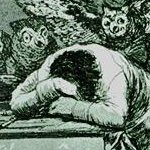
Did I imagine that? Fringed around that memory like floating cherubs were the homeless from that time, vivid and tragic to me, thrashing in the air, taunted by demons more visible than their humanity.
Back then, I assumed they were temporary victims of economics, the sign of a downturn, but no. We’re in an AI boom now, but the boom brings in more homeless. Tempts them in, and then throws them from the hilltops, tumbling down into the flooded underpasses.
Liz and I caught the elevator down to the subway concourse at 16th Street because 24th’s had broken again. The lift doors opened, warm as hell inside, with two crack smokers, cosy, with candles and pipes like a Christmas scene. They didn’t step out, and came down with us, chit-chatting about the weather, then rose again as the doors closed on them. Getting high, then getting low, then getting high again.
Across the Bay, in Berkeley, the storms follow me. The number 6 bus to Lighthaven drives me past previous strata of communities, cults, and churches. Past the Black Panther Party Museum, past old painted signs to a psychedelic mushroom church, the Sufis and Sudo Room, the First Presbyterian and the East Bay Church of Religious Science, the Yoga and Montessori. The Berkeley student seated in front of me shouts into his AirPods louder than any of the ranting bums we have seen today. He urges his friend on the other end of the call to read the Tao Te Ching. It’s a “Japanese book” written “a long time ago”. His friend would like it, he says. “They’re poems, but shorter.”
I step off the bus, straight into a storm drain without a family, a ward of the state. Two workmen pick at its swell with unsuitably tinny rakes, made for a New England fall. You need to cut at it harder, with chrome hooks for hands!
My shoes are soaked. I was 36 when I came to San Francisco wearing my unsuitable shoes. I felt slightly too old for that boom and every one since, like I’d missed the bus I was meant to take, like I was always late for work. This year, for the first time, the winter weather makes my bones ache.
Lighthaven is warm. It has a roaring fire and happy transplants and children with parents, sat beside piles of dry volumes that someone there has read or is reading, has written or is writing. Adoptees of each other, facing their first and maybe the last boom together. I huddle under a weighted blanket. My face warms up, but my feet won’t dry.