Zodiac is Neal Stephenson’s earliest novel (that he hasn’t actively disowned). It’s an eco-thriller with many elements of subsequent Stephenson works, including small boats, toxic waste, narrative sidequests into infrastructure tourism, the private provision of public goods, and, most pertinently, the hypercompetent, asshole protagonist.
The part of the book that really spoke to me, though, is when this version of Stephenson’s Eternal Asshole, freelance eco-warrior Sangamon Taylor, gets himself into trouble so deep that even he can’t big-brain himself out of it. Running out of options, he finally turns up, late at night, on the doorstep of a mysterious figure — the smartest person he knows.
Kelvin is a difficult person to describe. We had gone to college together, sort of. He had this way of drifting in and out of classes. I’m not sure if he even registered or paid tuition. It didn’t matter to him because he didn’t care to have grades, or credits, or a diploma. He was just interested in this stuff. If one day’s lecture was boring, he walked out, wandered up and down the halls and maybe ended up sitting in the back of an astrophysics or medieval French seminar.
Kelvin, in contrast to Taylor’s disaster of an existence, lives a perfectly steady life in suburban Belmont with his family. In Taylor’s words, he “wrote highly conceptual software, mostly for 32-bit personal computers and, every once in a while, helped me out with a problem.”
Taylor’s problem at this point is that (spoiler: he’s contaminated with a form of genetically engineered bacteria), which Kelvin helps solve, while simultaneously comforting a five-year-old in footed pyjamas who wants cranberry-raspberry juice in a She-Ra mug.
There’s nothing better than being pretty clever and knowing someone who is the next step up, is preternaturally sane and well-balanced, and still takes your calls. Even if you haven’t seen each other in years, they’ll understand the situation within a handful of escalatingly precise questions, and calmly come up with something you would never otherwise have thought of.
I’m looking at this person’s number in my phone’s contacts. I think I’ve called them four or five times this decade, and I’ve never regretted it. I am also humbly aware that to a small circle, I am that number: I am the smartest person they know. I’d guess you too play this role for some subsection of your life. We’re all nodes on a giant phone-tree of useful advice.
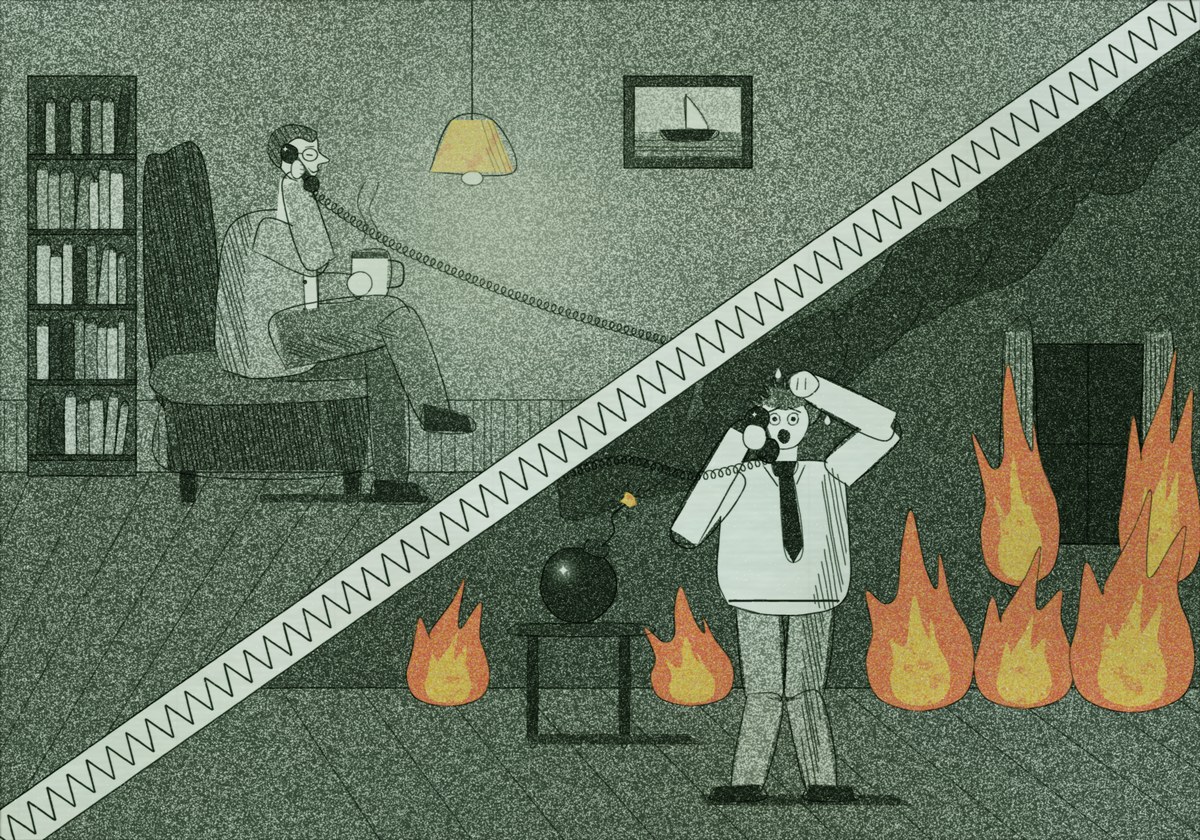
The trick here is to not call that number that often. If you do, you’re calling too high up the tree. The smartest person you know can’t be the smartest person everybody knows; that doesn’t scale. Call me instead. If you’re really in trouble, I’ll escalate for you. Believe me, I have worked hard in my life to ensure that I’m not the smartest person I know so I can still have this escape hatch. I do not wish to be at the top of this tree.
One of the saddest, most dangerous places to be in society is off this tree, without a smarter, calmer friend.
Some people end up that way by avoiding anyone who makes them feel dumb. They want to stay the smartest person they know at whatever cost.
Others just never get the chance to grow close to someone who could help them escape the conditions they have been saddled with. Maybe they just never made the right friends; or maybe all those people used their skills to leave town a long time ago, and never left a number to call.
Smart Friends In A Box
And now we all have a smarter friend, of sorts, in a box. Current AI models are definitely smarter than me in some directions (for instance, remembering the names of the characters in a Stephenson novel). In that, they share some literary genes with the smart-person-in-a-sci-fi-novel.
And I know there’s not really a strictly ordinal chain of cleverness outside of competence porn, and intelligence is multifaceted blah blah blah. But even if the LLMs are just halfway competent therapists, that’s better than a huge chunk of the population has ever had before. For all the stories of LLMs doing the modern equivalent of a GPS steering the car over a cliff, the paternalistic autotone of the frontier models hints to me there’s got to be a whole wave of people being gently persuaded, by a new artificial member of their social circle, not to go and fuck someone up for what they said, then leg it before the pigs turn up.
Good or bad result? I’m thinking good, but, hey, I’m an optimist. I know towns where the only advice left comes from careless institutions. I know how long and hard it can be to find people who can help, and get onto the phone-tree of life.
But I know you like your tech benefits bittersweet, so to sour the image a little: does having a Public Universal Friend for everyone break the social connections of the tree we described? Does that even matter? How does your smarter friend decide when to help you, and when to demur? Who are they answering to, if not themselves? And how do we know, in the absence of a cranberry-raspberry-drinking kid downstairs, that their advice comes from a safer, calmer, more centred place?